
Bexar County Warrant Search Access
The county once ran a stand-alone Fugitive Search at fugitivesearch.bexar.org. That tool is gone. It was folded into the new Justice Information Portal, the same Tyler Technologies system that powers case and jail lookups. So a single portal now covers court records, hearings, jail, payments, and warrants in one place.
But warrants are not open to everyone. The portal user guide is clear. Only certain authorized agencies and justice partners, such as law enforcement, have the security clearance to search warrants. A regular member of the public cannot run a full active-warrant lookup. This is a real limit, not a workaround you have missed.
So what can you do? Search the court case tied to the warrant instead. A case search is public, and the case summary often shows the court, the bond, the settings, and the disposition. The screenshot below is the Justice Portal dashboard that holds the payments and case tools.
The image comes from the county's Justice Portal dashboard.
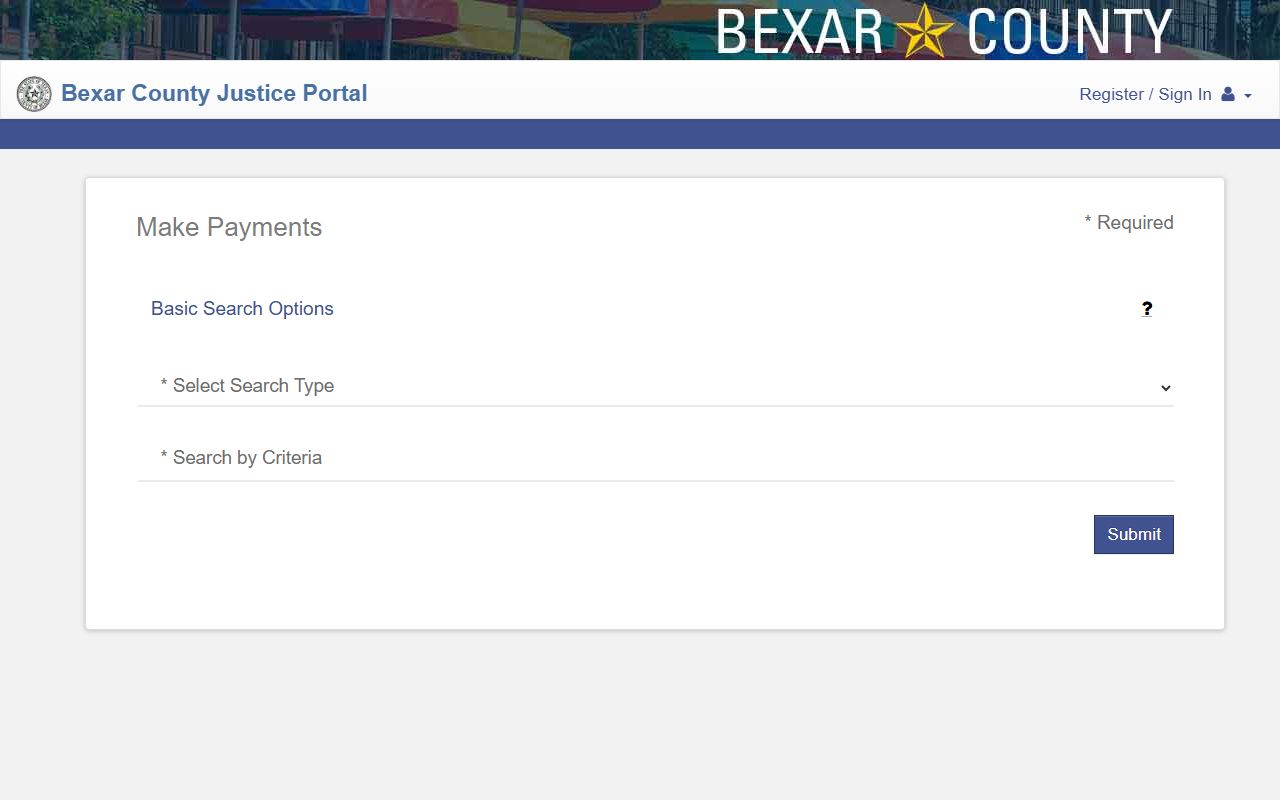
From this portal you reach Smart Search, jail records, and payment cases. The warrant include option sits behind clearance, so the public view stops at the case level.
Types of Bexar County Warrants
A warrant is a court order. Different orders do different jobs. Some send police to make an arrest. Some return a person who skipped court. Knowing the type helps you find the right office. The list below covers the common kinds you may see in Bexar County warrant records.
- Arrest warrant - issued after a judge finds probable cause to arrest a named person.
- Bench warrant or capias - issued when someone misses court, ignores an order, or is held in contempt.
- Capias pro fine - tied to unpaid fines or court costs, often from a lower court case.
- Search warrant - lets officers search a place; it is usually not public before it is served.
- Fugitive or out-of-county warrant - another jurisdiction's warrant that can show up as an out-of-county charge in the jail data.
- Sealed warrant or indictment - not public until it is unsealed or the arrest is made.
A bench warrant and a capias often mean the same thing in practice. Both pull a person back before the court. A capias pro fine is narrower. It usually follows unpaid fines in a justice or municipal court setting.
How the Warrant Search Works
The search starts in Smart Search, the same screen used for case lookups. Authorized users open the advanced panel, set the search type, and check the boxes for what to include. The Warrants box only works for accounts with clearance. For the public, the practical path is a case search.
- Open Smart Search on the Justice Portal.
- Click Advanced Filtering Options to expand the panel.
- Scroll to Filter by Search Type and pick the option you need.
- Under Include, an authorized user checks Cases, Judgments, and Warrants.
- Enter a case number, a warrant number, or a wildcard such as 13CR1188201 with an asterisk.
- Click Submit to run the search.
For users with clearance, the results show all cases and warrants that match. The rest of us stop at the case data. That still helps. A case search can confirm an open matter, the court, and the next setting.
Note: The Warrants include option is reserved for law enforcement and justice partners, so a public account cannot return a full active-warrant list.
Bexar County Warrant Search Fields
The warrant search reuses the Smart Search controls. The table below lists the main fields from the county's portal guide. Note that the Warrants checkbox is gated by clearance, so it does nothing for a public login.
| Field Label | Type | Required | Notes / Format |
|---|---|---|---|
| Smart Search criteria | Text | Yes | Case number, warrant number, or wildcard case number for authorized users. |
| Advanced Filtering Options | Expandable panel | Yes for warrant search | Opens the include and search-type controls. |
| Filter by Search Type | Dropdown | Yes | Case Cross-Reference Number and warrant-related options for authorized users. |
| Include: Cases | Checkbox | No | Open to the public; returns court case records. |
| Include: Judgments | Checkbox | No | Returns judgment records when available. |
| Include: Warrants | Checkbox | Gated | Works only for accounts with security clearance. |
| Submit | Button | n/a | Executes the search. |
So a public user can check Cases and Judgments. The Warrants box stays out of reach. That is the core limit to keep in mind.
What a Bexar County Warrant Record Shows
A warrant result is thin by design. Clicking a warrant number returns only basic warrant information for cleared users. For the full picture, the guide says to run a case search instead. The inventory below sums up what you see at each step.
| Field | What It Shows |
|---|---|
| Warrant Number | The unique ID for the warrant; clicking it returns only basic data. |
| Linked Case Number | The court case the warrant belongs to; the path to full detail. |
| Issuing Court | The court that signed the order, county or district. |
| Charge or Cause | The offense or the reason the order was issued. |
| Bond Amount | Any bond tied to the warrant or the case, where shown. |
| Status | Whether the order is active, recalled, or served. |
To get the full record, the guide gives a clear path. Open Smart Search, enter the case number, check Cases under Include, then click the case number inside the case summary. The case events carry the depth that a bare warrant number does not.
The jail data is a second clue. A jailing charge can list a warrant number and the issuing authority. So if a person was booked, the Bexar County inmate records page may show the warrant tied to the charge.
How to Resolve an Outstanding Warrant
If you think a warrant is out for you, act with care. Do not ignore it, and do not trust random third-party sites. Use the county tools and the court that issued the order. The steps below follow the path the county and Texas practice point to.
- Skip third-party warrant sites. Use the Justice Portal, a case search, the court clerk, the sheriff, or an attorney.
- If you have a case number, search the case and read the court, bond, setting, and disposition data.
- Contact the issuing court or clerk for the next court date, payment, recall, or appearance steps.
- For a county misdemeanor warrant, contact the County Clerk or the county court at law channels.
- For a felony warrant, contact the District Clerk or the criminal district court channels.
- If you were recently arrested, check the Central Magistrate list and the Jail Search.
- Consult counsel before you surrender on serious charges; appointed-counsel eligibility runs through the court's indigency process.
- After it is resolved, allow time for the warrant recall to post in the systems, then confirm with the court or clerk.
The misdemeanor versus felony split decides which clerk you call. A misdemeanor points to the County Clerk. A felony points to the District Clerk. Getting this right saves a wasted trip.
Important: Talk to a lawyer before you turn yourself in on a serious charge, since bond, timing, and the surrender process can shape the outcome.
Indigent Defense and a Warrant
A warrant can lead to an arrest and a first appearance at magistration. If you cannot afford a lawyer, you may qualify for appointed counsel. The Bexar County Public Defender represents indigent people as appointed by the trial courts and authorized by the county's indigent defense plans. The office does not decide whether you are indigent. The court does that through a financial screening.
Since January 2019, the Central Magistration mission expanded. The Public Defender now can represent people who are not yet represented, who have no bond set, and who consent to representation for all charges. There is also a Managed Assigned Counsel system for appointments. Request counsel at magistration or in court, and complete the financial screening as directed.
The page below is the county's Public Defender's Office overview.
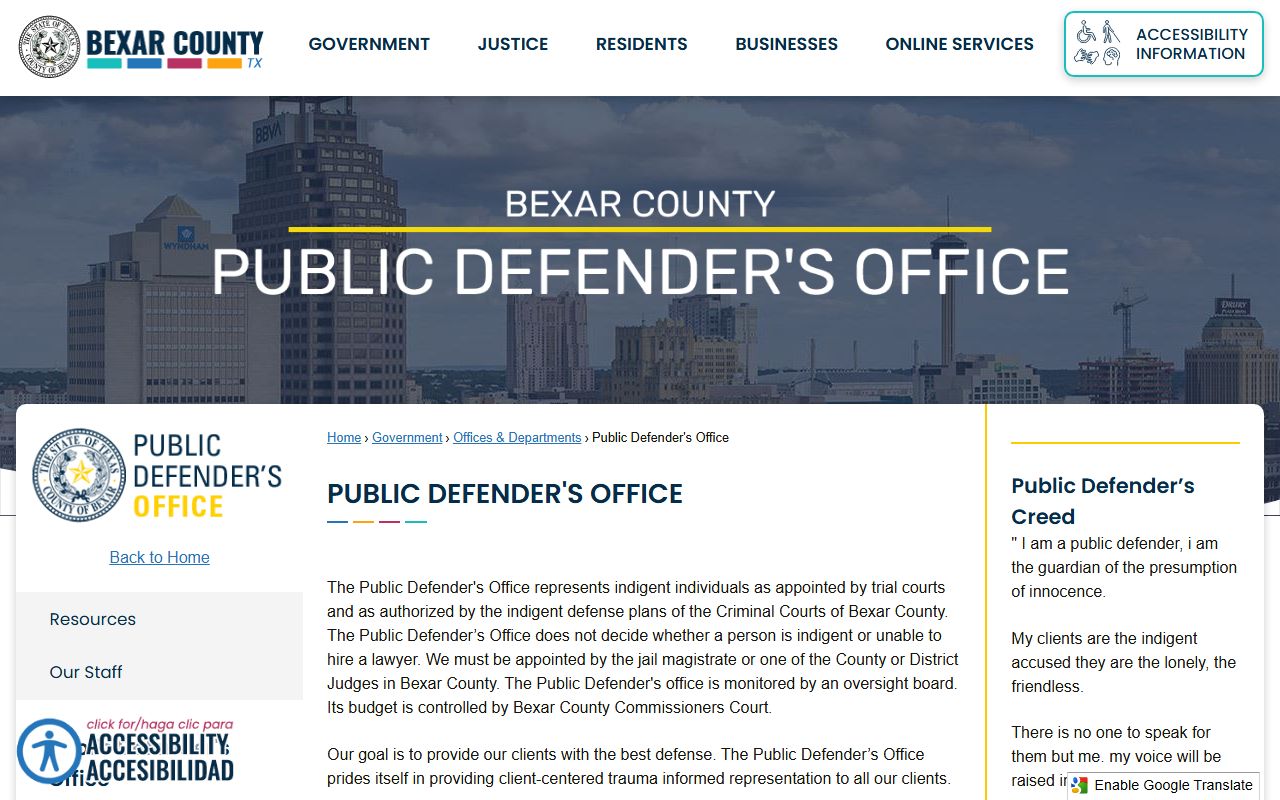
The Public Defender also handles mental health commitment matters in the probate courts and consults on immigration consequences in assigned criminal cases. So the office reaches further than a single court.
The county's role in indigent defense follows a written plan filed with the state. That plan is below.
The plan comes from the Texas Indigent Defense Commission.
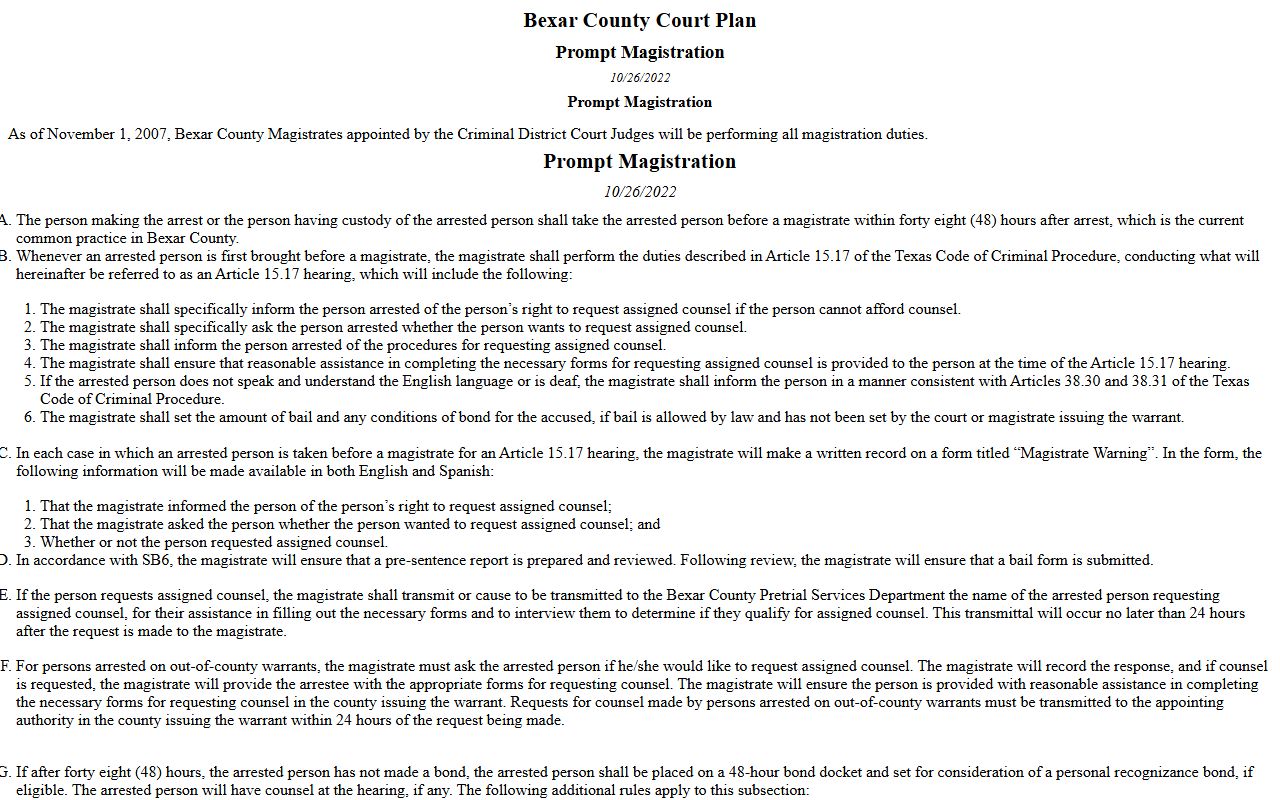
By standing order, the Public Defender is appointed at Central Magistration for qualifying indigent arrested people, including those with mental illness who request counsel and are not represented. Private payment to appointed counsel is barred, except for county-approved payment.
Restricted Bexar County Warrant Records
Some warrants stay hidden on purpose. A sealed warrant or a sealed indictment is not public until it is unsealed or the arrest takes place. A search warrant is usually not searchable before it is executed, since early disclosure would defeat its point. These limits exist beyond the general clearance rule on the portal.
Juvenile matters carry their own confidentiality. Federal warrants are not in the county system at all; those belong to the federal courts and agencies. For sealing and clearing of records after a case ends, the state guide below explains expunction and nondisclosure.
The guide is the Texas State Law Library resource on expunctions and nondisclosure.
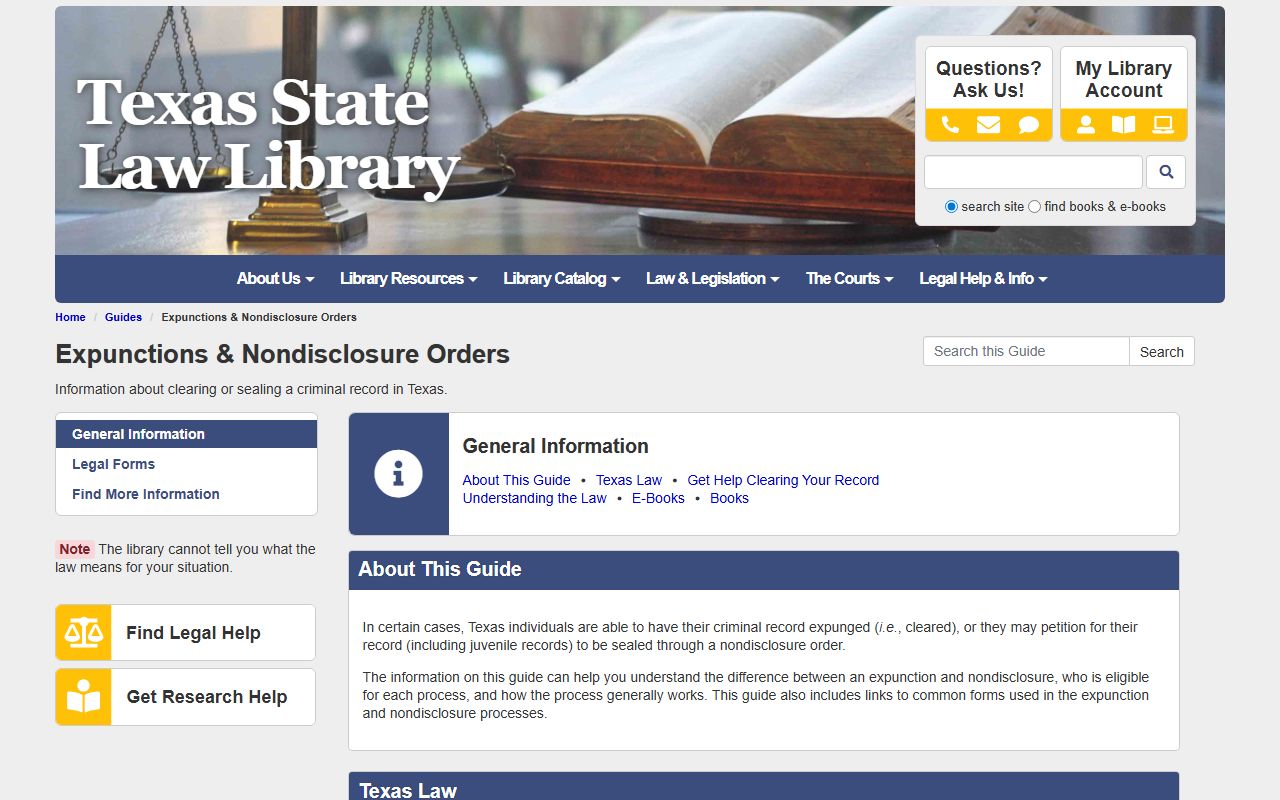
Expunction can remove qualifying records. Nondisclosure seals a record from the public while leaving law enforcement access. Both are filed in district court, and eligibility turns on the case outcome.