
Bexar County Probate Courts
Bexar County runs three statutory probate courts. Each one is led by an elected judge. They share the same kinds of cases but split the load. Probate is the legal process where a court checks if a will is valid, opens an administration when there is no will, and finds the legal heirs of a person who has died. The courts also set up guardianships for people who cannot care for themselves.
Beyond wills and estates, these courts hear more. They supervise estates of the deceased, of incapacitated adults, and of minors. They handle trust matters, including testamentary and charitable trusts. They also hear civil mental health commitments and some eminent domain cases. Probate Court No. 1 is the one that handles the civil mental health docket.
The screenshot below comes from the county's Probate Courts listing.
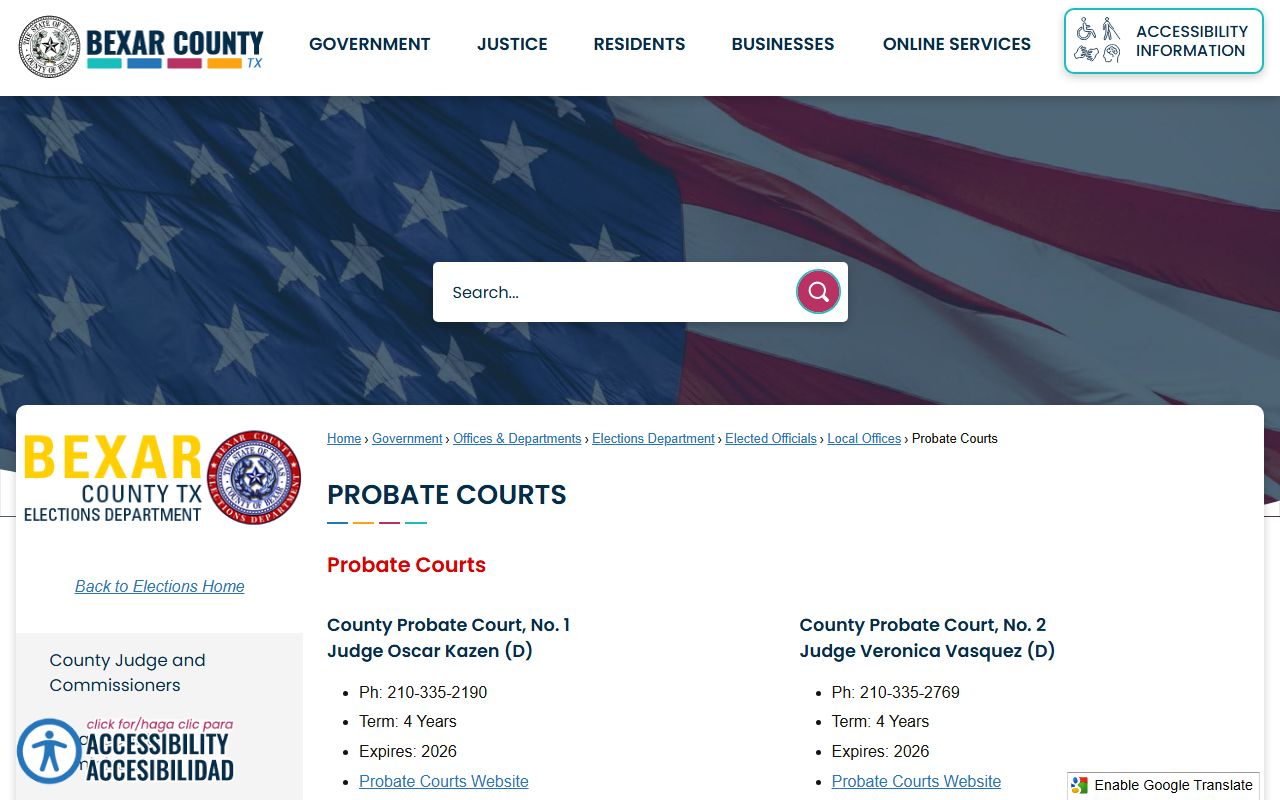
That page names each judge and links to court contacts. It is the official starting point for probate questions.
Note: All three probate courts sit at 100 Dolorosa, so check the room or suite number before you visit the right court.
Probate Court Contacts
Each probate court has its own room and phone. They all sit in the same downtown building, but the numbers differ. Call the court that holds your case before you go. The cards below list the address and phone for each one.
Probate Court 1
Judge Oscar Kazen
100 Dolorosa, Room 117
San Antonio, TX 78205
210-335-2546
Probate Court 2
Judge Veronica Vasquez
100 Dolorosa, Room 123
San Antonio, TX 78205
210-335-2678
Probate Court 3
Judge Barbie Scharf-Zeldes
100 Dolorosa, Suite 1.20
San Antonio, TX 78205
210-335-1917
The Probate Clerk is a separate counter. It sits in the basement of the Old Courthouse at 100 Dolorosa and can be reached at 210-335-2241. The Mental Health Court works out of 300 Dolorosa in the basement near Jury Duty, with its own line at 210-335-2536. For other court phone lists, see the Bexar County court dockets page.
What Bexar County Probate Records Cover
Probate is more than just wills. The records span several case types. Knowing the type helps you find the right file and the right court. Here are the main kinds you will see.
- Wills and probate - the court checks a will and admits it to record.
- Estate administration - opened when a person dies with or without a will.
- Heirship - the court finds the legal heirs of a person who died.
- Guardianship - care and authority set for a minor or an incapacitated adult.
- Trusts - matters tied to testamentary and charitable trusts.
- Civil mental health - commitment cases heard under Probate Court No. 1.
Each type makes its own paper trail. A will case holds the will, the application, and the order admitting it. A guardianship case holds the application, medical letters, and the order naming a guardian. The file grows as the case moves, so the docket can run long.
Common Probate Terms
Probate uses words that trip people up. A few quick definitions help you read a file. The list below covers the ones you will run into most.
- Testator
- The person who made the will.
- Executor
- The person named in the will to carry it out.
- Intestate
- When a person dies without a valid will.
- Guardianship
- A court setup giving a guardian authority over a minor or an incapacitated adult.
- Conservatorship
- A court role to manage the affairs or property of someone who cannot do so alone.
You will also see the word "letters." That means letters testamentary or letters of administration. They are the court papers that prove a person has the power to act for an estate.
Bexar County Probate Record Fees
The probate courts charge set fees for copies, filings, and estate work. The amounts below come from the 2026 fee highlights. A plain copy is cheap. A certified copy adds a flat charge on top of the per-page cost. Estate filings, like accounts and sales, cost more because they need court review and notice.
| Item | Amount |
|---|---|
| Plain copies | $1.00 per page |
| Certified copies | $5.00 per document plus $1.00 per page |
| Exemplified copies | $7.00 per set plus $1.00 per page |
| Letters | $2.00 |
| Safekeeping of Will | $5.00 |
| Deposit for copies of filings | $35.00 |
| Annual Account | $25.00 |
| Final Account | $80.00, notice included |
| Application to Sell Real Property | $80.00, notice included |
The deposit for copies of filings is tied to Estates Code 51.202. It covers the cost of making and sending copies to parties. Some filings, like the final account, build the cost of posting notice into the fee. Always check the current schedule before you file.
How Probate Works in Bexar County
A probate case follows a path. It starts with a filing and ends when the estate closes. The steps below show the usual flow, though each case differs.
- Decide what you have: an original will, a copy, no will, or a guardianship or trust issue.
- File the application with the Probate Clerk for the right probate court.
- Pay the filing fees and any notice or copy deposits.
- Get a hearing setting under the court's policies.
- The court rules on the will, heirship, administration, or guardianship.
- Letters may issue once the representative qualifies.
- The representative files the inventory, notices, and accountings.
- The estate may close after debts, assets, and distributions are handled.
Some courts publish checklists and hearing-setting forms. Those help you bring the right papers the first time. A short delay early on can push a hearing back weeks, so read the court's policy before you file.
Searching Bexar County Probate Records
Probate records can be searched a few ways. The Bexar County Justice Portal carries probate case data, and the hearing search includes Probate Courts 1, 2, and 3. The County Clerk and official records pathways hold other probate documents, depending on the record type. So the right tool depends on what you want, a case summary or a recorded document.
For the full portal walkthrough and the search fields, see the Bexar County court records page. Estate matters often tie to other county files too. Wills can name property, and a death can trigger a transfer of a deed or title held by the County Clerk.
The screenshot below is from the county's Probate Courts operational page.
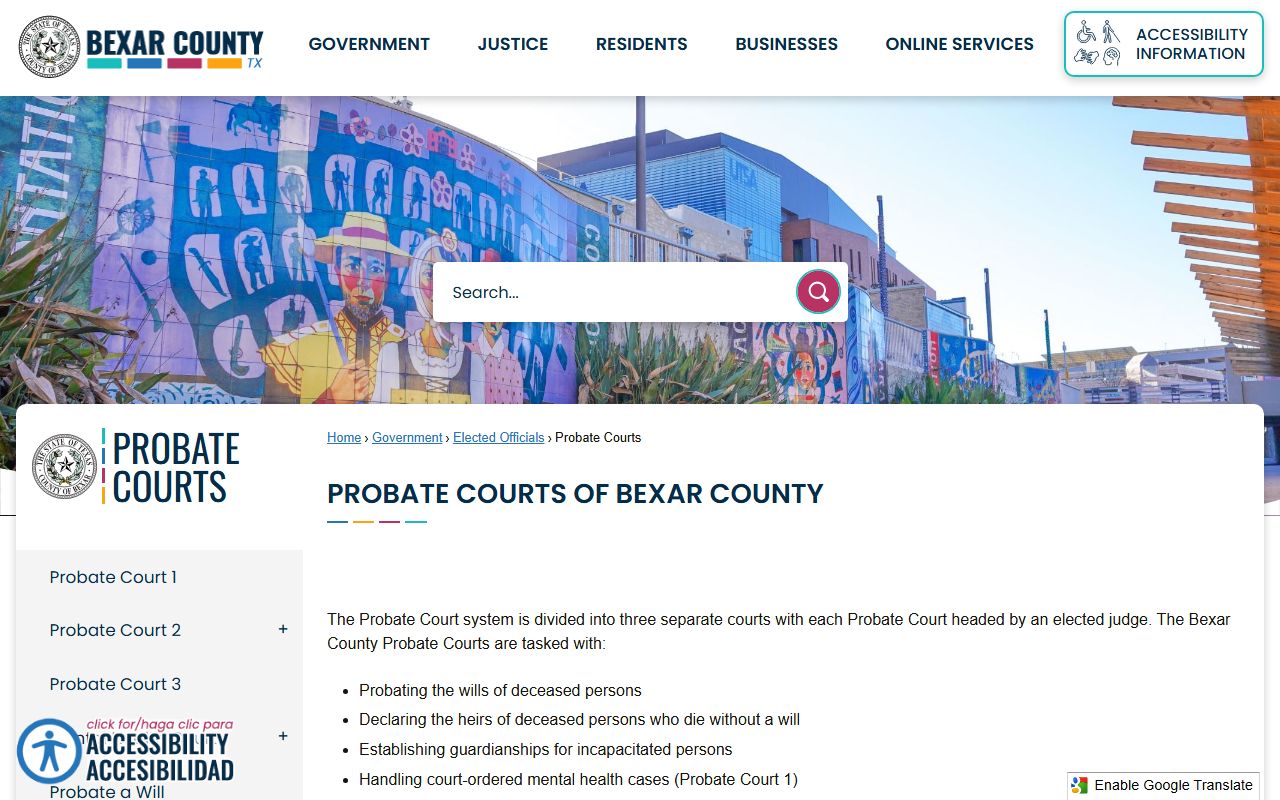
That page links to court policies, forms, and hearing information. It is the day-to-day hub for people with active cases.
Civil Mental Health Commitments
Probate Court No. 1 handles civil mental health cases. These are commitment matters, not criminal cases. The court holds probable cause and commitment hearings, often at the state hospital. Because these files hold medical data, they are among the most protected probate records. Public access is limited by law.
The screenshot below comes from the county's Mental Health Court page.
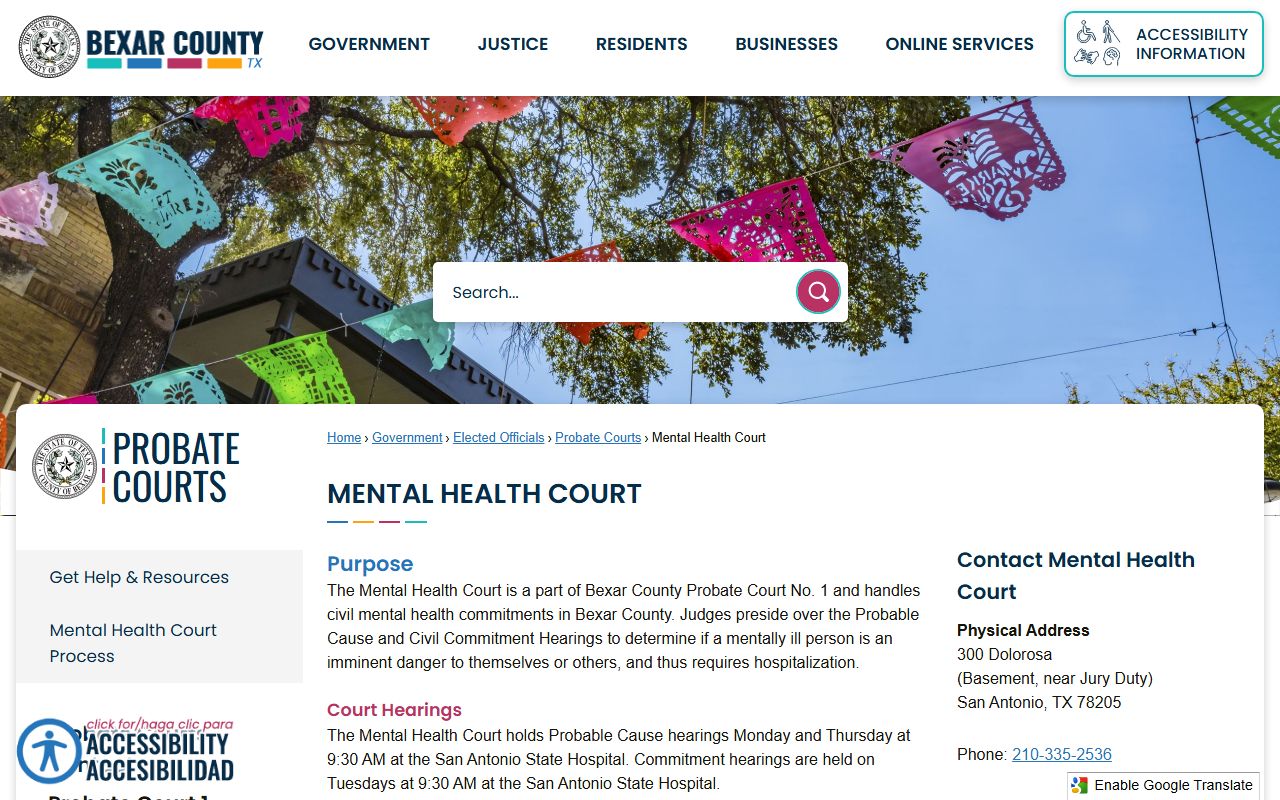
That page explains the civil commitment process and the court's role. A separate criminal Mental Health Court handles certain misdemeanor cases, so do not confuse the two.
Note: Civil mental health commitment records hold medical information, so Texas law keeps them sealed from general public view.
Probate Record FAQs
How many probate courts does Bexar County have?
Bexar County has three statutory probate courts. Each one has an elected judge. They all sit at 100 Dolorosa in downtown San Antonio, but in different rooms and suites.
Are Bexar County probate records public?
Most probate case files are open to the public. But civil mental health commitment records are sealed because they hold medical data. Some guardianship details may also be limited.
What does the Probate Clerk do?
The Probate Clerk takes filings, holds the case files, and makes copies. It sits in the basement of the Old Courthouse. You pay copy and filing fees there.
How much is a certified probate copy?
A certified copy costs $5.00 per document plus $1.00 per page. A plain copy is $1.00 per page. Check the current fee schedule before you order.
More answers live on the Bexar County court records FAQ page.