
How to Search Bexar County Traffic Court Records
The Justice Portal Make Payments tool is the main online stop for traffic cases. It lets you find a citation and pay or review it. The county built it on the same Tyler system as the rest of the portal. It handles criminal and traffic payment cases together.
Before you start, find your citation number. A case number, name, or driver's license number also works. Have the date of birth ready for some name and driver searches.
- Open the Make Payments tool on the Justice Portal.
- Pick a search type: Citation Number, Case Number, Party Name, Business Name, or Driver's License.
- Enter your criteria, plus date of birth if the search asks for it.
- Click Submit and open the matching citation or case.
- Pay online, or note the court and date to contest the ticket.
This tool covers payment and citation lookups. For a full case file, use Smart Search on the Bexar County court records page instead.
Which Courts Handle Traffic Cases in Bexar County
Traffic cases do not all go to one court. The charge and the location decide the court. Most minor traffic tickets are Class C misdemeanors. Those land in a justice of the peace court or a municipal court like the San Antonio Municipal Court. More serious charges move up to county or district court.
Law enforcement writes the citation that starts the case. Sheriff's deputies, constables, and city police all issue traffic tickets in Bexar County. The page below is the Sheriff's command staff page.

The court named on your citation is where the case lives. The Justice of the Peace page explains the precinct courts that hear most Class C traffic matters.
Types of Traffic Cases on Record
Traffic records cover a wide range. Some are simple fines. Others carry points, license holds, or jail time. The list below shows the common types you may find in Bexar County traffic records.
- Moving violations - speeding, running a light, unsafe lane changes.
- Non-moving violations - expired registration, parking, equipment issues.
- No insurance or no license - Class C cases that can stack with other charges.
- Commercial vehicle violations - tied to a commercial driver license.
- DWI and DUI - criminal charges that move to county or district court.
Class C tickets are the most common. A DWI is different. It is a criminal case, not a simple fine, and it follows the criminal court track.
What Bexar County Traffic Court Records Show
A traffic record holds the citation data and the case result. The Make Payments tool and the case summary show these fields. The fields below are what a Bexar County traffic record typically shows.
- Citation number - the ticket number written at the stop.
- Case number - the court case the citation created.
- Party name - the driver or business cited.
- Violation - the offense charged, such as speeding.
- Court and amount due - the court that heard it and any fine or costs owed.
- Disposition - how the case ended, such as paid, dismissed, or convicted.
Driver's license numbers are protected data. Texas Government Code § 552.130 requires that motor vehicle and license data be redacted from public releases.
Searching by Citation Number vs by Name
The Make Payments tool gives several ways in. A citation number is the fastest and most exact. A name search is broader and may return more than one match. A driver's license search ties results to one driver. The table below lists the search fields from the county's portal.
| Field Label | Type | Required | Notes / Format |
|---|---|---|---|
| Select Search Type | Dropdown | Yes | Citation Number, Case Number, Party Name, Business Name, or Driver's License. |
| Search by Criteria | Text | Conditional | For citation or case searches. |
| Last / First / Middle Name | Text | For name search | Used in party and driver searches. |
| Sounds Like | Checkbox | No | Matches similar-sounding names. |
| Date of Birth | Date | Conditional | mm/dd/yyyy; needed for some name and driver searches. |
| State / Driver's License Number | Dropdown / Text | Conditional | For driver's license searches. |
Use the citation number when you have it. Fall back to name or license only when you do not.
Paying or Contesting a Bexar County Traffic Ticket
You have choices on a ticket. You can pay it, contest it, or ask for options like a driving course. Paying a ticket is often a guilty plea, which can add points to your record. Contesting keeps the case open for a hearing. The steps below cover the basic path.
- Find your citation in the Make Payments tool by citation or case number.
- Read the charge, the court, and the amount due.
- To pay, follow the online payment or pay alternatives offered for the case.
- To contest, do not pay; instead enter a not guilty plea with the court named on the ticket.
- Ask the court about a defensive driving course or deferred disposition before the due date.
- Keep your receipt and confirm the disposition updated in the record.
Note: Paying a Bexar County traffic ticket usually counts as a guilty plea, so weigh a course or a contest before you pay.
Public Access Laws for Traffic Court Records
Most traffic court records are open. They are court records under Texas access rules, like other case files. Still, some data is held back. Driver's license and motor vehicle data are protected under Texas Government Code § 552.130. Sealed or nondisclosed records do not appear in a public search.
A request for a county administrative record goes through the Texas Public Information Act. A court-record request goes to the court or clerk that holds the file. For the full framework, see the Bexar County public records page.
Court Traffic Records vs State Driver Records
This is the split people miss most. The court traffic record is the case file in the court that heard the ticket. The state driver record is your driving history kept by the Texas Department of Public Safety. They are two different files held by two different agencies. The comparison below shows how they differ.
| Point | Court Traffic Record | State Driver Record |
|---|---|---|
| Held by | Justice, municipal, county, or district court | Texas Department of Public Safety |
| Holds | The citation, charge, and case result | License status, points, and crash history |
| Find it through | The Justice Portal or the court clerk | Texas DPS driver record request |
| Fix an error | Contact the court that heard the case | Contact Texas DPS |
If you need proof for court, use the certified court record. If you need your point total or license status, request the state driver record from DPS.
CDL and Commercial Driver Records
Commercial drivers face stricter rules. A ticket that is minor for a regular driver can threaten a commercial driver license. Texas limits deferred disposition for CDL holders, so a course may not erase a commercial violation the same way. Commercial cases still show in the court traffic record and feed the state driver record.
A CDL holder should read any traffic case with care. Talk to the court or an attorney before you pay, since the result can affect a job. The driver record kept by DPS carries the commercial history that employers and regulators check.
DWI and DUI Cases in Bexar County
Driving while intoxicated is not a simple traffic ticket. It is a criminal charge. A DWI moves to county or district court, and an arrest creates a booking record. If a person is jailed on a DWI or a traffic warrant, family can find mailing rules and contact details on the Sheriff's pages. The page below is the Sheriff's inmate mail page.
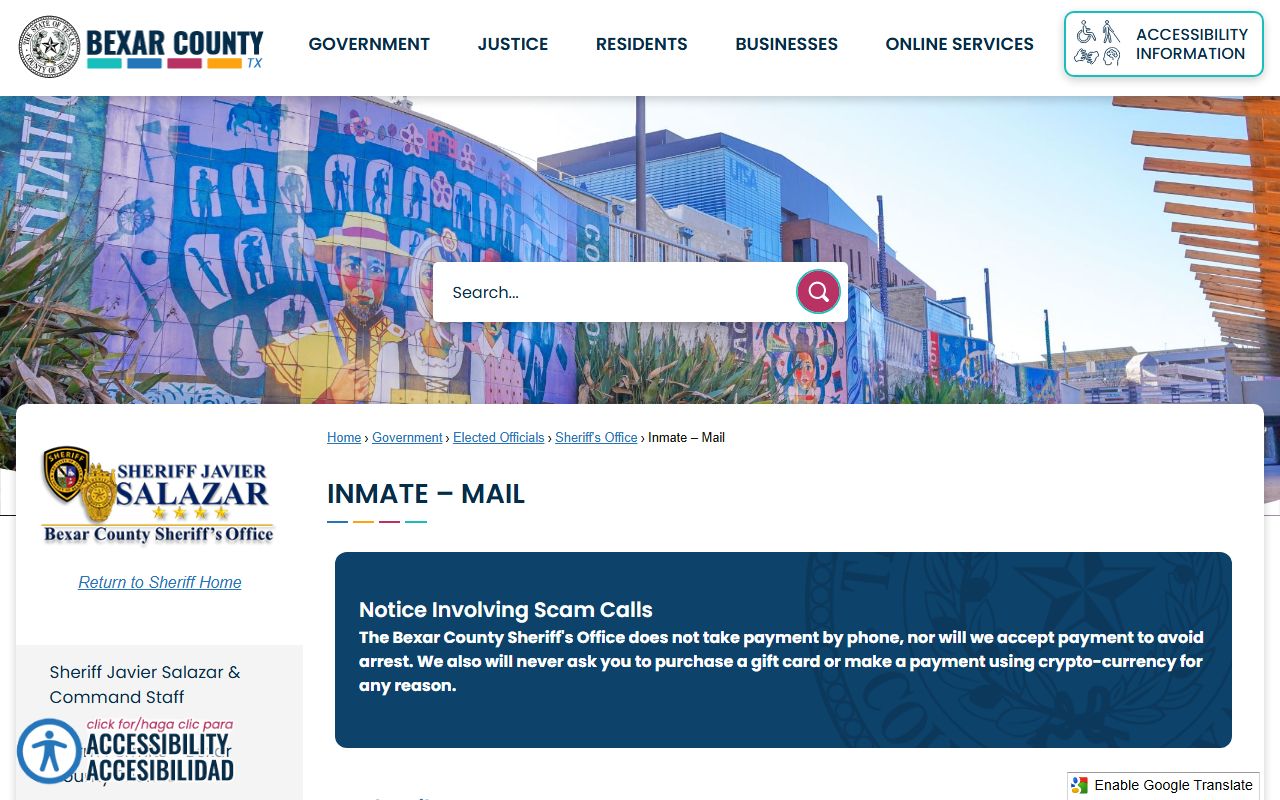
Because DWI is criminal, it follows the criminal track. See the arrest records page for booking data and the inmate records page for custody status.
Deferred Adjudication and Defensive Driving
Texas offers ways to keep a ticket off your record. A defensive driving course can dismiss a qualifying Class C citation. Deferred disposition holds the case open while you stay out of trouble for a set time, then dismisses it. Both must be requested before the due date and approved by the court.
Not every case qualifies. CDL holders and some charges are limited. Ask the court named on the citation what it allows. If you miss the deadline, you may lose the option and a conviction can land on the record.
Sealing or Expunging Traffic Records
An unpaid Class C fine can trigger a capias pro fine, which is a warrant to collect the fine. Clearing it usually means paying or arranging the fine with the court. For records, a dismissed or acquitted charge may qualify for expunction. Some deferred outcomes point to nondisclosure instead. Both are filed in district court.
The District Clerk handles the filing and fees for these requests. For the process and costs, see the arrest records page, which covers expunction and nondisclosure in detail. A warrant tied to a missed traffic date is covered on the warrant records page.
Fees and Federal Traffic Citations
Copy fees follow the clerk's schedule. A plain copy of a court record runs about a dollar per page. A certified copy costs more because it carries the clerk's seal. Fine amounts vary by charge and court, so check the citation or the court for the exact total.
| Item | Amount |
|---|---|
| Plain copy per page | $1.00 |
| Certified copy per document | $5.00 after copy fee |
| Fine amount | Varies by charge and court |
A few traffic citations are federal, not local. Tickets written on federal property, such as a military base, go to the U.S. District Court for the Western District of Texas. Those records live in the federal system, not the county portal. The page below is PACER, the federal case access service.
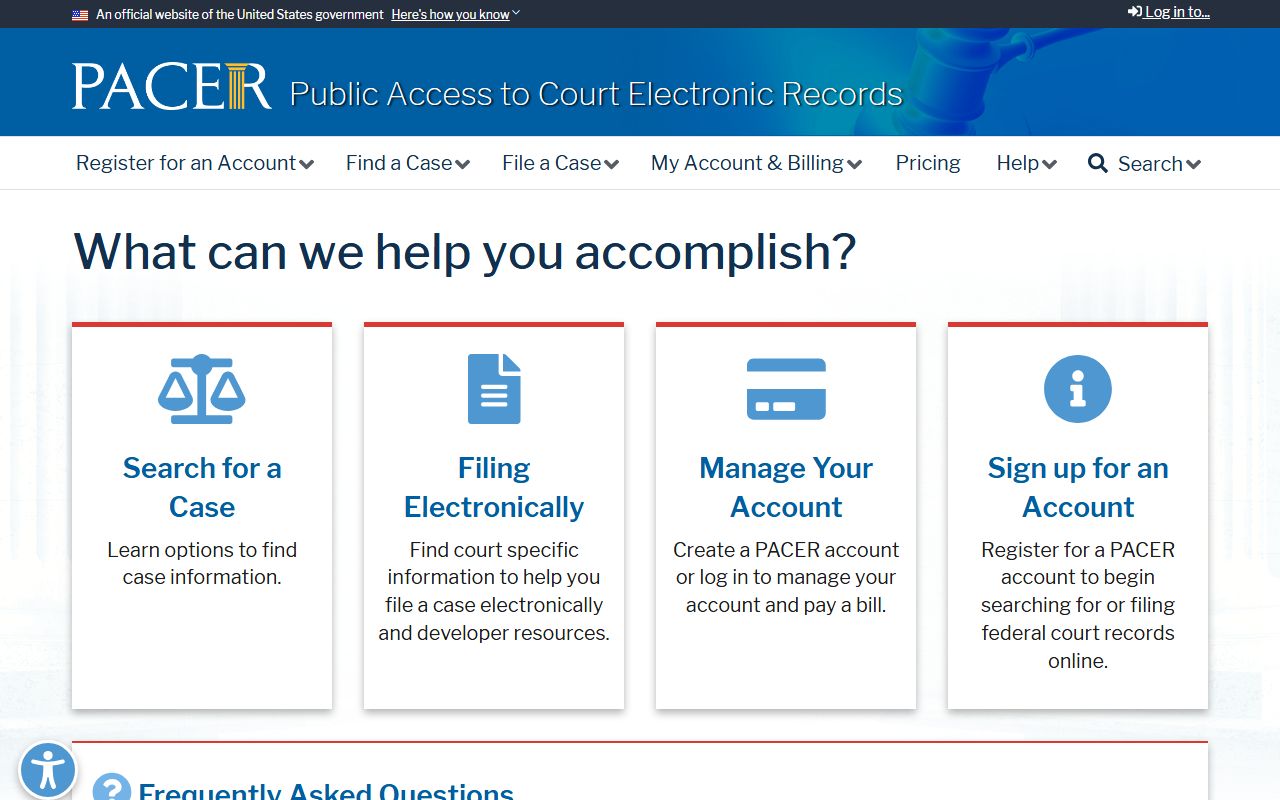
Federal cases are filed and tracked through CM/ECF. The screenshot below is the Western District CM/ECF system.
For more on the federal track, see the federal courts page. Local tickets stay with the county and city courts.