
How to Find Bexar County Arrest Records
Two official tools cover recent arrests. The Central Magistrate recent arrest search lists people processed in the last 24 hours on Class B or higher offenses. The Sheriff's jail search returns booking and charge data for people in custody. For older arrests tied to a case, the Justice Portal case search is the next stop.
Before you search, gather a full name. A booking number or SO number helps if you have one. Recent arrests update fast, but the county warns booking data can lag.
- Open the Central Magistrate search for arrests in the last 24 hours.
- Check the jail search for booking number, charges, and facility.
- For an older arrest, search the related case in the Justice Portal.
- Note the charge and disposition, since an arrest is not a conviction.
- Contact the District Clerk for felony files or the County Clerk for misdemeanors.
Recent arrests appear within 24 hours on the Central Magistrate list, which covers Class B or higher offenses only.
Bexar County Booking and Arrest Reports
When an officer makes an arrest, the person is taken to Bexar County intake at the Adult Detention Center. The Central Magistrate processes Class B or higher offenses. Booking records identifying data, a booking number, SO and SID numbers, the arrest agency, the charges, and the booking date and time. A magistrate then sets bond or release conditions.
The Sheriff posts Jail Activity Reports as a free courtesy. The county says all of this information is public, and that people listed are presumed innocent until proven guilty. These reports stay online for a maximum of seven days, then roll off.
For the full roster, profile fields, and contact methods, the Bexar County inmate records page covers the jail search in detail.
What a Bexar County Arrest Record Shows
An arrest record holds booking and charge data. The Central Magistrate list shows a short set of columns. The full jailing profile shows much more. The fields below are the ones you will see most on a Bexar County arrest or jailing record.
- Name and booking number - the person booked and the unique booking ID.
- SO and SID numbers - Sheriff's Office and state identification numbers.
- Arrest agency - the agency that made the arrest.
- Charge description - the offense the person was booked on.
- Booking date and time - when the person entered the jail.
- Bond type and disposition - the bond set and the current status, such as released on bond.
The Central Magistrate list shows name, race, age, SID, and booking number for arrests in the last 24 hours. The jailing profile adds physical description, facility, and charge-level cost fields like fine, costs, and total cost. A booking number runs in a B-year-number format, which helps when you search the roster.
Arrest Record vs Criminal Court Record
An arrest record and a criminal court record are different files from different agencies. The Sheriff creates the arrest record at booking. The clerk creates the court record when charges are filed. The comparison below lays out the split.
| Point | Arrest Record | Criminal Court Record |
|---|---|---|
| Created by | Bexar County Sheriff at booking | District Clerk or County Clerk at filing |
| Holds | Booking data, charges, mugshot flags | Indictment, pleas, judgment, sentence |
| Find it in | Central Magistrate, jail search | Justice Portal case search |
| Shows guilt? | No, an accusation only | Yes, if there is a conviction |
To follow a case from arrest to result, start with the arrest record, then open the matching court record in Bexar County court records.
Charges vs Convictions
This is the line people miss most. A charge is what the state accuses. A conviction is a finding or plea of guilt. Many arrests never lead to a conviction. Cases get dismissed, reduced, or end in acquittal. The comparison below explains the difference.
| Point | Charge | Conviction |
|---|---|---|
| Meaning | The state's accusation | A finding or plea of guilt |
| Stage | At or after arrest | After trial or a guilty plea |
| Shown as | Charge description on the booking record | Disposition and sentence in the court record |
Read the disposition before you judge a record. A booking with charges is not proof of guilt.
Felony and Misdemeanor Records in Bexar County
The two county clerks split criminal court files. The District Clerk is the custodian for felony criminal records. The County Clerk handles county court at law misdemeanor records. So a felony points to the District Clerk and a misdemeanor points to the County Clerk. Both feed the Justice Portal, but each holds its own certified files.
The District Clerk page profiles the office and its criminal filing counter. The screenshot below is the District Clerk home page.
For felony case files, call the Criminal Filing counter at 210-335-2591. See the District Clerk and County Clerk pages for copy steps.
Mugshots and What Is Public
Booking photos are part of the jail record. The Bexar County jailing profile uses flags for front, left, and right mugshots, which means the system can show more than one angle when photos exist. Mugshots and booking data are public information under county practice.
Still, not all arrest data is open. Driver's license numbers, Social Security numbers, and juvenile information are redacted by Texas law. Active investigation records can be withheld under Government Code § 552.108. The county routes arrest, mugshot, and jail record requests to the Sheriff's Office.
Sealed vs Expunged Records
Texas gives two ways to limit a criminal record. Expunction destroys or removes qualifying records. Nondisclosure seals a record from the public but leaves access for law enforcement. The comparison below shows how they differ. Both are filed in district court.
| Point | Expunction | Nondisclosure (Sealing) |
|---|---|---|
| Effect | Records destroyed or returned | Records sealed from public release |
| Who can still see | Generally no one | Law enforcement and some agencies |
| Typical use | Dismissals, acquittals, some diversions | Many deferred adjudications |
| Filing fee | $350 plus $25 per agency | $350 petition; $28 order |
The District Clerk fee schedule lists these costs. The screenshot below is the District Clerk fee schedule.
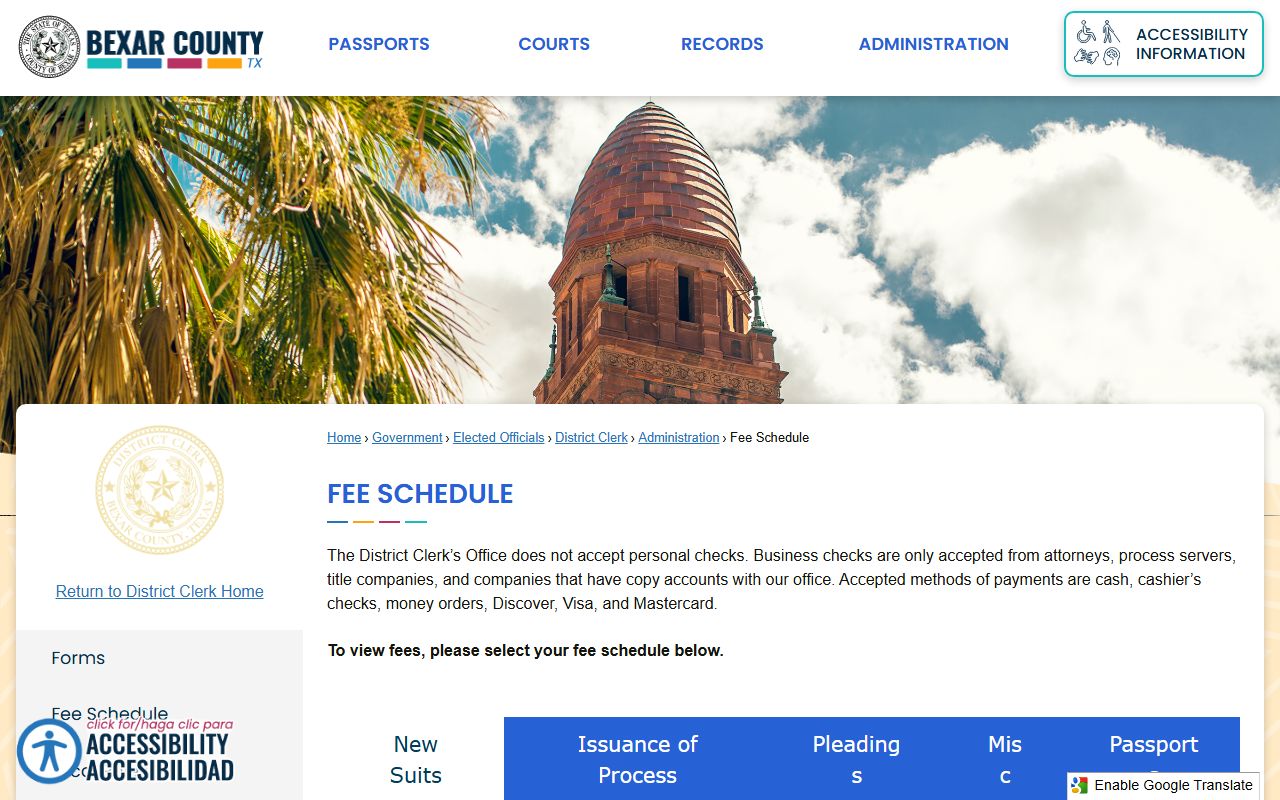
The Texas State Law Library guide explains who qualifies. Eligibility turns on the outcome and waiting periods.
How to Clear a Bexar County Arrest Record
Clearing a record is a court process. A person files in district court because record sealing is a judicial matter. The basic path is below. An attorney or legal aid clinic can help, since a mistake can stall the case.
- Check eligibility based on the case outcome and any waiting period.
- File an expunction petition or a petition for nondisclosure in district court.
- Name and serve each agency that holds the record, such as the Sheriff and DPS.
- Pay the filing fee listed on the District Clerk schedule.
- Attend the hearing if the court sets one, then obtain the signed order.
- Allow time for agencies to remove or seal the record after the order.
Common denials include an ineligible conviction, a pending charge, a waiting period not met, or an agency not properly served. Dismissals, acquittals, and some diversions are the strongest expunction candidates. Deferred adjudication usually points to nondisclosure instead.
Public Access Limits for Arrest Records
Texas opens most criminal records but shields several kinds. Juvenile arrest and court files are confidential. Sealed and expunged records do not appear in public search. Grand jury matters are confidential until an indictment or arrest. The law enforcement exception can hold back reports during an active case.
Note: A Bexar County arrest record alone does not prove guilt, and sealed or expunged matters should not appear in a public search.
District Attorney and Defense Resources
The Bexar County Criminal District Attorney prosecutes felony and serious cases. The office runs a Victim Assistance division that helps crime victims with case-status updates, court accompaniment, compensation applications, and property return. The page below is the DA's Victim Assistance service.
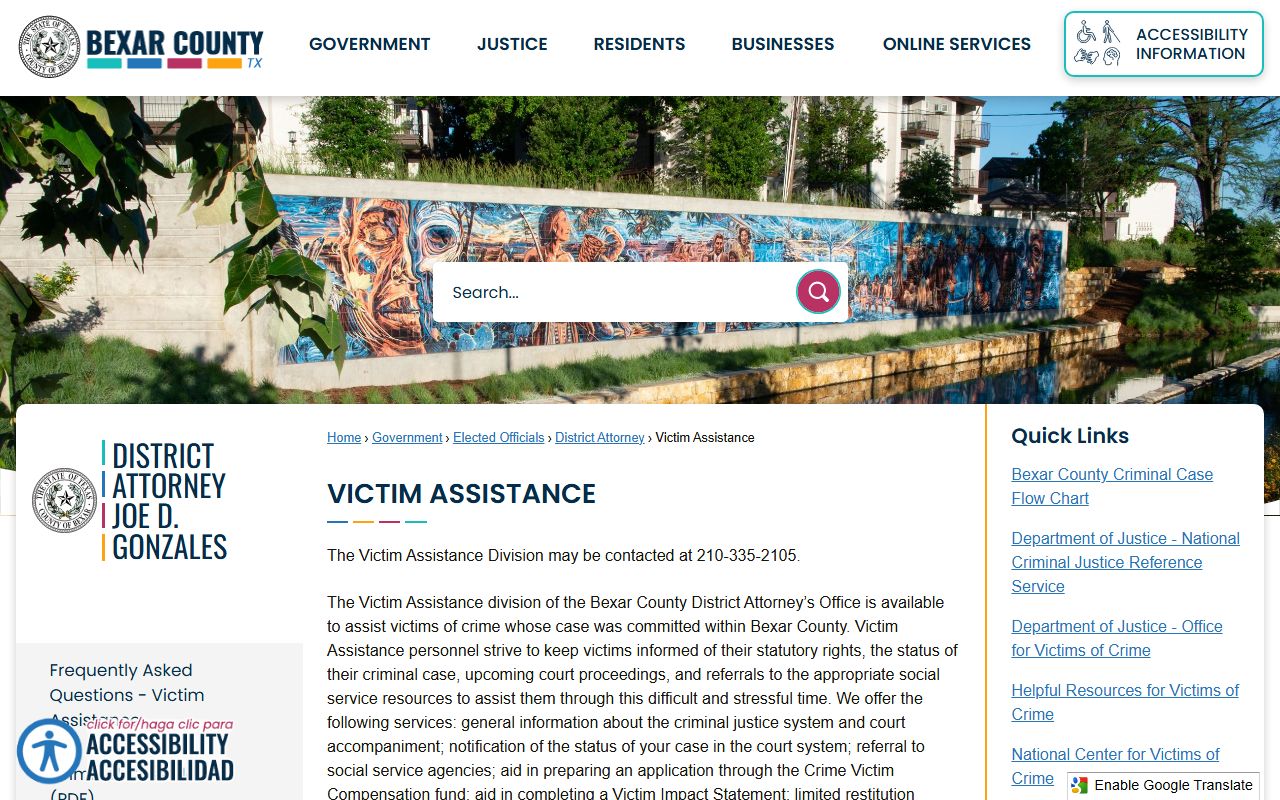
On the defense side, the Bexar County Public Defender represents indigent people as appointed by the courts. A defendant who cannot afford a lawyer should request appointed counsel at magistration or in court. The DA's division chiefs page lists the prosecution units.
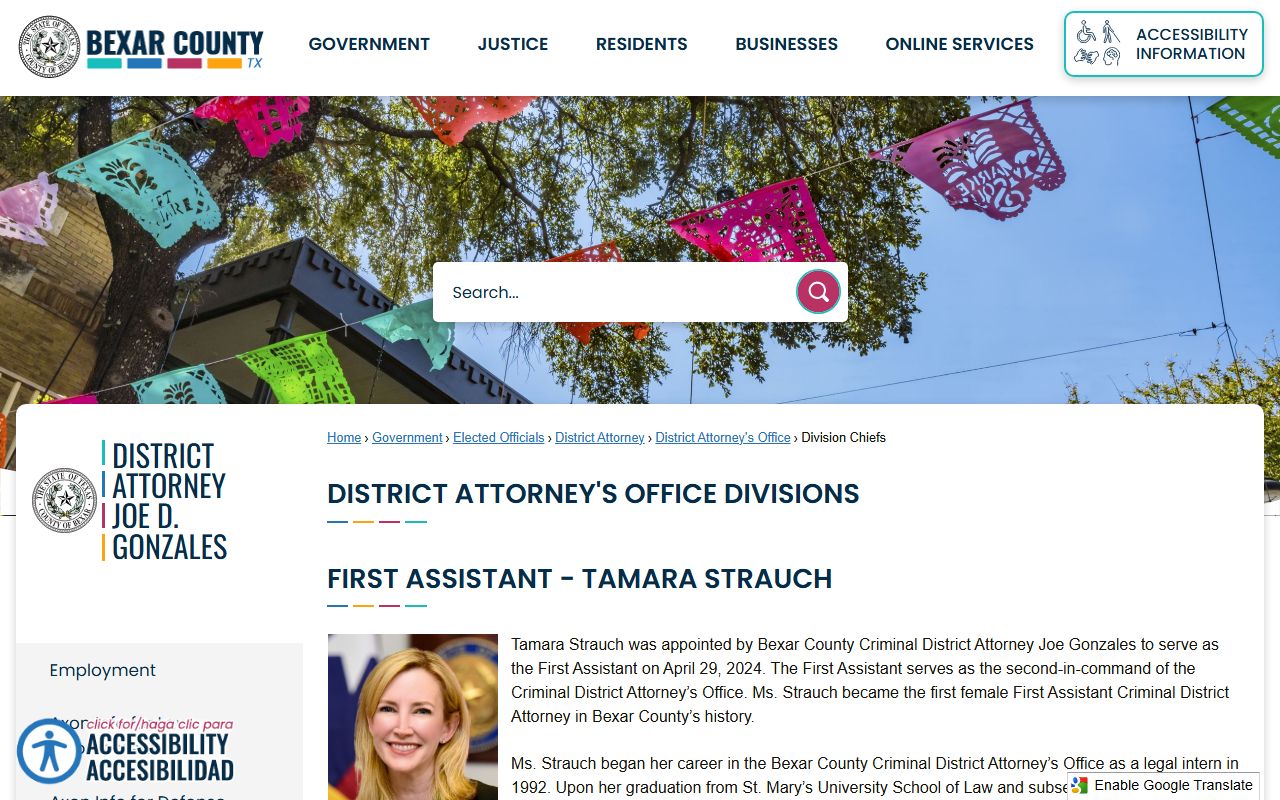
For warrant questions after an arrest, see warrant records. For custody status, see inmate records.
Background Checks and Statewide Criminal History
A county search shows Bexar County data only. A person may have records in other counties or states. For a statewide criminal history, the Texas Department of Public Safety runs the official program. For traffic-related criminal cases like DWI, see the traffic court records page, since DUI and DWI route through criminal court.
Use certified court records for any legal or formal purpose. Online arrest data is a starting point, not the final word. Always confirm a charge or disposition with the clerk who holds the file.